
PORT OF QUÉBEC TAKES A MAJOR STEP TOWARDS SHORE POWER WITH SUPPORT FROM THE GOVERNMENT OF QUÉBEC
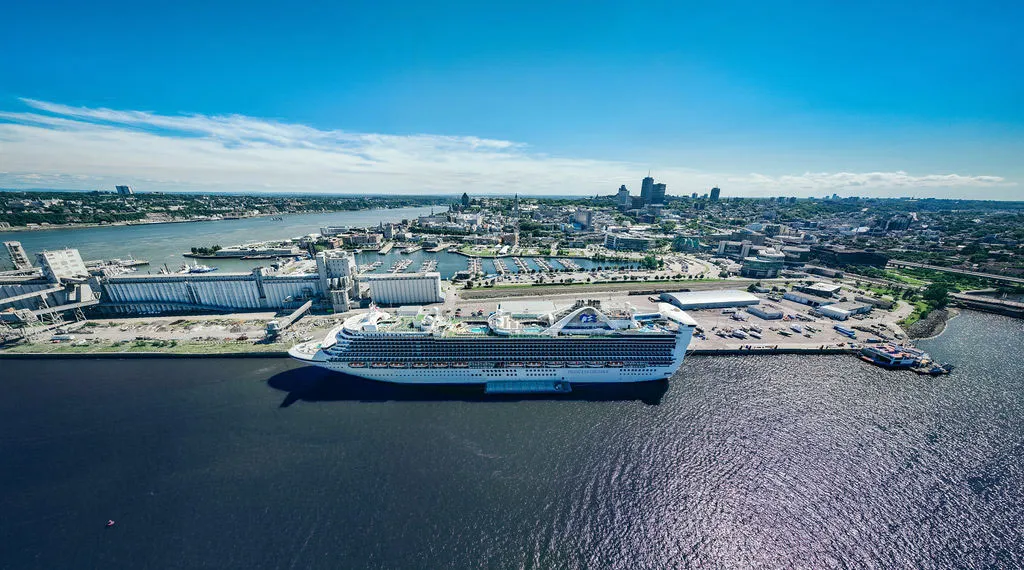
Québec City, July 3, 2026 — The Port of Québec is applauding a Government of Québec announcement confirming $4M in financial support for the electrification of Wharf 30 and a further $1.1M for Wharf 101 under its Programme d’efficacité du transport maritime, aérien et ferroviaire.
These projects are a decisive step in developing the electrical infrastructure needed to implement shore power for cruise ships and certain cargo ships at the Port of Québec. This will allow compatible ships to shut down their auxiliary engines while calling at the Port, significantly reducing their pollutant emissions.
This support from the Government of Québec is making it possible for us to solidify a major project for the Port of Québec’s future. Shore power is central to our decarbonization strategy; it will tangibly improve air quality and citizens’ lives while firmly establishing our Port as one that is committed to the energy transition
The Port of Québec is a strategic gateway for our economy. From welcoming cruise ships to supporting the transportation of critical and strategic minerals, it plays a vital role in our economic corridor. By investing in the electrification of its wharves, we are helping to make the Port more modern, more efficient and more sustainable. This investment will strengthen our economy, support our environmental goals and help build a stronger future for Québec
Reducing GHG emissions and noise pollution
At Wharf 30, which is dedicated to international cruises, shore power will reduce the greenhouse gases associated with calls in Port waters by around 90%—or nearly 70,000 tonnes—over 10 years. In addition to helping the Port meet rising expectations for sustainability, this upgrade will help support its development of the cruise market.
Wharf 101 will mark a first on the St. Lawrence, as it will become the first cargo-focused wharf to provide shore power connectivity. It will cut hundreds of hours of fossil fuel use each year. Over 10 years, the project is expected to prevent nearly 5,600 tonnes of fossil fuel emissions while improving air quality and reducing noise pollution in the area.
A greener corridor
This initiative will also give the Port of Québec greater appeal to the cruise market. It is part of a broader effort to establish an increasingly green maritime corridor along the Canada–New England route. It will be joining the cohort of ports that have been or will be electrified by 2030—a cohort that includes the ports of Montréal, Charlottetown, Halifax, Boston, and New York, among others.
The provincial government’s financial support for hydroelectric shore power is meaningful not only for the Port of Québec, but for the entire St. Lawrence cruise corridor. As more ports invest in this type of infrastructure, the region is becoming an increasingly attractive destination for cruise lines and their passengers, who are seeking travel experiences supported by cleaner and more sustainable operations.
Significant investments
The Wharf 30 project is anticipated to cost a total of $23M. Half of the funding will come from the Government of Canada under the Green Shipping Corridor Program, which was announced in November 2024. This will be supplemented by the $4M contribution announced by the Government of Québec today, as well as up to $7.5M from the Port of Québec itself. Shore power is expected to be available starting in the fall of 2028.
The Wharf 101 project, will require a total investment of $5.1M, half of which will be covered by the federal government. The Government of Québec will provide another $1.1M and the Port of Québec, nearly $1.5M. Shore power is expected to be available starting in the fall of 2028.
About the Port of Québec
The Port of Québec is strategically located 1,100 km from the Atlantic Ocean, close to the Great Lakes market. It is the last deepwater port in the St. Lawrence corridor, with a depth of 15 metres. This unique position allows Canadian companies to achieve significant economies of scale in both import and export trade.
With links to more than 40 partner countries, the Port of Québec and its employees handle an average of over 26 million tonnes of goods every year, representing a commercial value of over $15 billion.
The Port is also recognized as the leading cruise port on the St. Lawrence; along with all its partners in Québec’s maritime industry, it contributes to $2 billion in economic spin-offs while supporting some 12,000 jobs nationwide.
The Québec Port Authority (QPA) is ranked 4th out of the 17 Canadian port authorities in terms of revenue. While it is economically powerful, it is also known for its contributions to the area’s urban and social fabric thanks to port spaces like the Agora, the Oasis, the Baie de Beauport, La Cale, the Discoglace, and the Village Nordik.
– 30 –
Source and information
Frédéric Lagacé
Director, Public Relations and Communications
418 929-5031 | [email protected]