
COLLAPSE OF WHARF 25 AT THE PORT OF QUÉBEC
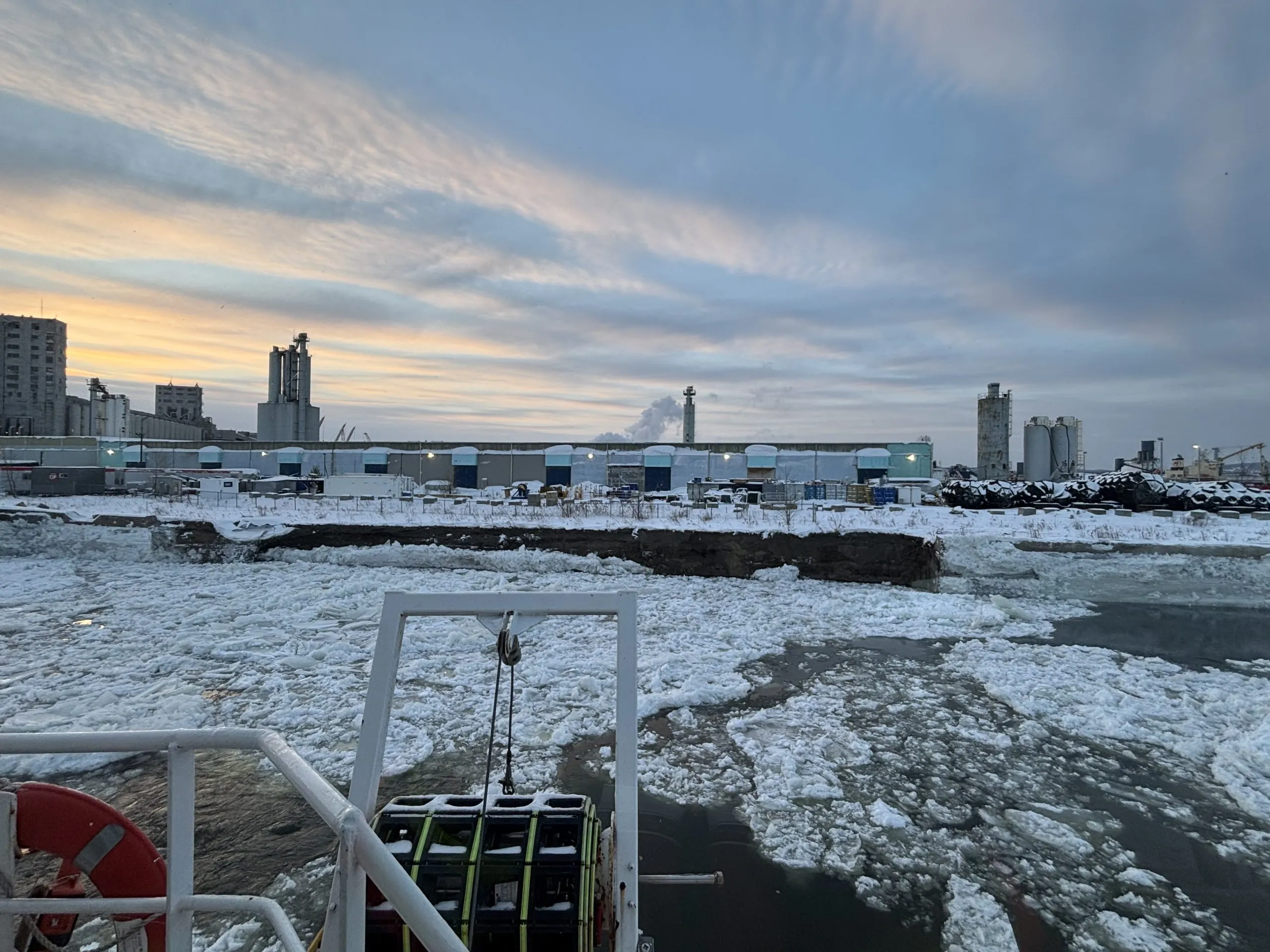
Québec City, January 5, 2026 – The Port of Québec is confirming that a a 60-metre section of the copewall of warf 25 collapsed into the St. Lawrence River yesterday between 7:00 AM and 1:00 PM. Another section, measuring around 40 metres, is in imminent danger of breaking.
Wharf 25 had reached the end of its useful life and had already been decommissioned for safety reasons. The affected area has been closed for almost 10 years. This event is to be expected for century-old infrastructure at the end of its life cycle.
Given the asset’s advanced state of decay, the progressive deterioration of the materials, and the harsh environment to which it is exposed, this type of failure is not surprising.
As soon as the collapse was reported, Port of Québec teams mobilized and collaborated with port partners to secure the site, protect the public and our employees, and ensure navigation was safe. The situation is under control, and we are continuing to assess the damage so that we can take thorough and responsible action.
Wharf 25: A Concrete Demonstration of the Urgent Need for Action
Wharf 25, built around 1905, is a 224-metre-long structure of wooden caissons topped by a concrete copewall. Activity has already been limited for the past 10 years, and it was closed completely in March 2023 as it had reached the end of its useful life.
In addition to its operational role, wharf 25 served as a bulwark for intra-port logistics routes and port infrastructures. With the collapse of the copewall, this protective role is now compromised making the infrastructures even more vulnerable to erosion and river conditions. It’s a clear demonstration of the fact that deteriorating wharves have effects far beyond the Port’s borders, with direct consequences for the resilience of supply chains and transport networks.
Safety: Situation Under Control
Following the incident, the Port of Québec notified all relevant regulatory authorities and will cooperate fully with them, as dictated by current procedures.
Port team also secured and extended the perimeter as a precautionary measure, implemented strict access control and continuous monitoring, and released the communications necessary for navigation. The expanded area is fully secure and inaccessible to both port operations and the general public.
In the short term, the Port plans to stabilize the site with riprap to limit erosion of the wharf. It is currently reviewing solutions with an external specialist to determine the most effective response. In the medium and long term, rebuilding the wharves remains the only sustainable solution for ensuring the safety, resilience, and longevity of port infrastructures.
Environmental Concerns: Strict Monitoring and Cooperation with the Authorities
The Port of Québec has also alerted and will collaborate with all relevant authorities, including the Canadian Coast Guard, Environment and Climate Change Canada, and the ministère de l’Environnement, de la Lutte contre les changements climatiques, de la Faune et des Parcs.
Port of Québec teams are currently assessing the environmental risks and will implement the appropriate measures.
Century-Old Wharves at the End of their Life Cycle
A significant proportion of the Port of Québec’s wharves are made up of structures built in the early 20th century, many of which have reached the end of their useful life. Despite as-needed repairs over the decades, the infrastructures have reached their structural limits.
The Port has a comprehensive monitoring and inspection program in place that allows it to identify risks, preventively close areas as needed, and protect both people and operations. In addition, higher-risk wharves were already included in the port infrastructure modernization plan announced in November. No risks have been identified for the wharves currently in operation.
A Structured Plan, a Clear Vision
The Port of Québec is an economic pillar of the Capitale-Nationale region that plays an essential role in regional competitiveness and market diversification. It supports strategic sectors like agri-food, transport, construction, mining, and energy.
Its infrastructure is critical but aging; several wharves are over a hundred years old and at the end of their useful lives. Without investment, closures are inevitable, which will directly impact security, the fluidity of supply chains, and the resilience of commercial networks.
These assets are federally owned. As such, the Government of Canada must fulfil its responsibility to guarantee the longevity of this strategic infrastructure.
In response to the challenges, last fall the Port submitted a comprehensive ten-year modernization plan, testifying to its preparedness and long-term vision. Projects are planned, ready to go, and supported by strong governance.
In fact, the Port had requested financial assistance from the federal governement three years ago to stabilize wharf 25, but received no response. This funding would have made it possible to start stabilization and riprap work to prevent the collapse. In that light, Port management intends to meet with federal authorities as soon as possible to discuss urgent financial support for the reconstruction work.
A Clear Call to Speed Up Modernization
The collapse of wharf 25 is a clear example of the foreseeable consequences of postponing investment in infrastructures that have reached the end of their useful life. The Port of Québec is reiterating the urgent need for the federal government to act quickly to modernize and rebuild the wharves, which are essential to safety, the protection of trade routes, and the resilience of supply chains.
The collapse of wharf 25 is an unfortunately concrete example of what happens when century-old infrastructures reach the end of their useful life. This event confirms the urgency of modernizing and rebuilding our wharves to ensure the security, resilience, and longevity of our infrastructures in Québec City.
About the Port of Québec
The Port of Québec is strategically located 1100 km from the Atlantic Ocean, close to the Great Lakes market. It is the last deepwater port in the St. Lawrence corridor, with a depth of 15 metres. This unique position allows Canadian companies to achieve significant economies of scale in both import and export trade.
With links to more than 40 partner countries, the Port of Québec and its employees handle an average of over 26 million tonnes of goods every year, representing a commercial value of over $15 billion.
The Port is also recognized as the leading cruise port on the St. Lawrence; along with all its partners in Québec’s maritime industry, it contributes to $2 billion in economic spin-offs while supporting some 12,000 jobs nationwide.
The Québec Port Authority (QPA) is ranked 4th out of the 17 Canadian port authorities in terms of revenue. While it is economically powerful, it is also known for its contributions to the area’s urban and social fabric thanks to port spaces like the Agora, the Baie de Beauport, the Oasis, La Cale, the Discoglace, and the Village Nordik.
– 30 –
Source and information
Frédéric Lagacé
Director, Public Affairs and Communications
418-929-5031 | [email protected]